The GR34 runs along the coast of Brittany for over 2,000 kilometres, from Mont-Saint-Michel to the bridge at Saint-Nazaire. Walking the entire route takes several months. A week, however, is enough to experience the highlights: the cliffs, the beaches, the fishing ports and that feeling of walking between land and sea from morning till night. This guide offers a comprehensive seven-day itinerary in southern Finistère, from Névez to Pointe du Raz, with all the practical advice you need to prepare for your hike: accommodation, equipment, transport and the best time of year to go.
The GR34, the customs officers’ path
The GR34 follows the old coastal patrol path created in 1791 to monitor the coastline and combat smuggling. Customs officers used it for over a century, hence its nickname, the ‘customs officers’ path’. Restored from the 1960s onwards, it is now marked in red and white along its entire length and maintained by the FFRandonnée.
Don’t be fooled by its coastal appearance: the GR34 climbs and descends constantly as it winds its way around coves and headlands. Some sections involve several hundred metres of elevation gain. Voted the French public’s favourite GR route in 2018, it remains accessible to any regular walker, provided they plan their stages carefully.
© John Summerton / Tourisme Bretagne

Which section should I choose for a week’s hike?
It’s impossible to see everything in seven days, so you’ll need to choose a section. There are three key factors to consider: your fitness level, transport links and the type of scenery you’re looking for.
There are three options available to you for your first stay:
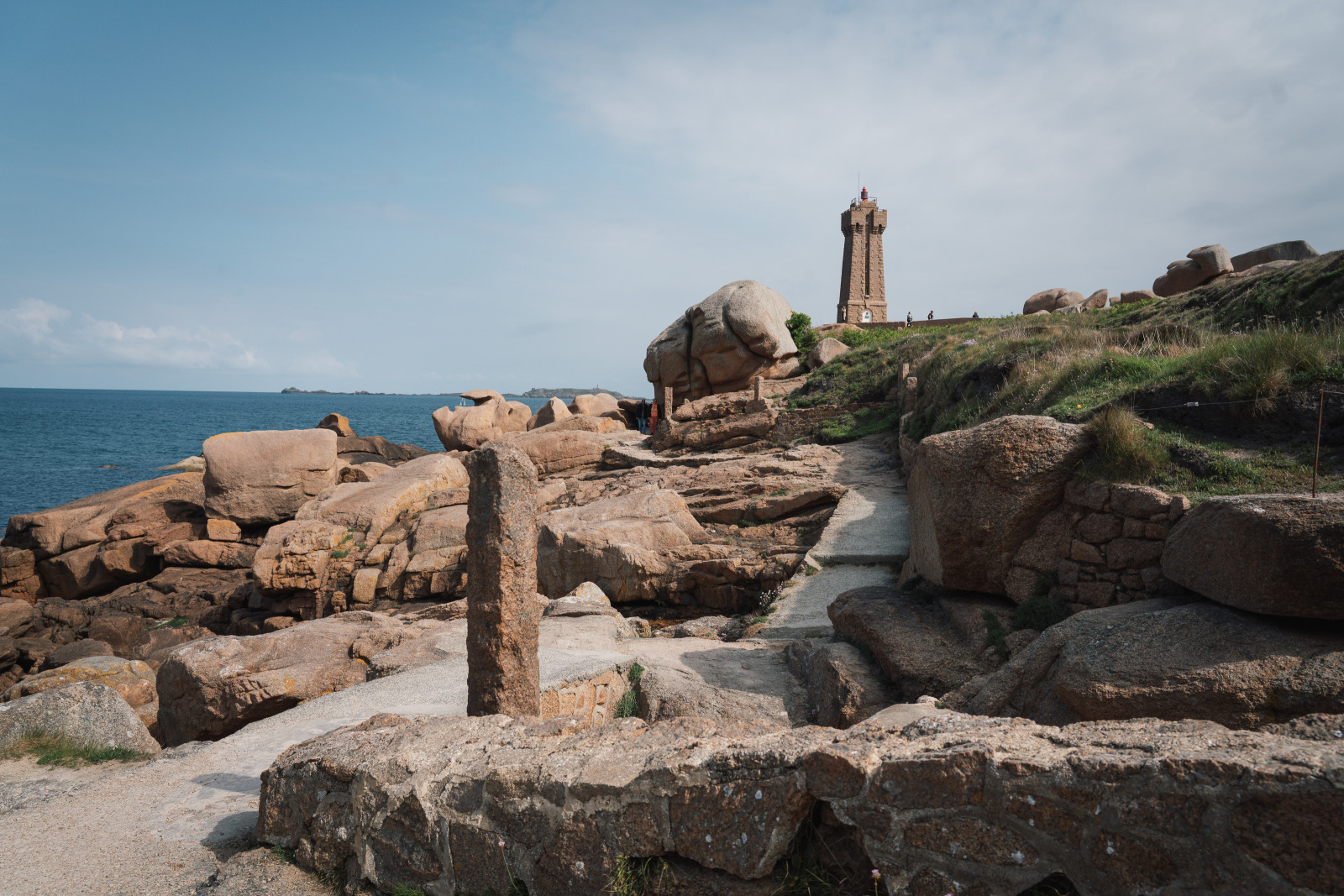
- The Pink Granite Coast, between Perros-Guirec and Tréguier: spectacular cliffs, but a very busy stretch in summer.
- The Crozon Peninsula and Cap de la Chèvre: the challenging option, with steep climbs and vertiginous cliffs. Read our article on ‘the most beautiful spots in Crozon’
- Southern Finistère, from Névez to Pointe du Raz: moderate walks, a wide variety of landscapes ranging from sheltered rias to rugged coastline, and easy access by train via Quimper.
It is this third option that we’ll be looking at in detail here.
The aim? To set off from the Pays de Névez and end up facing the ocean, at the end of the world, at the Pointe du Raz.
© Out Studio / Tourisme Bretagne
Day-by-day itinerary: a week on the GR34, from Névez to Pointe du Raz
The total distance is around 125 kilometres, which works out at stages of between 16 and 25 kilometres a day. This is a pace that’s manageable for a regular walker, without being too demanding.
The day before departure: arrival in Névez
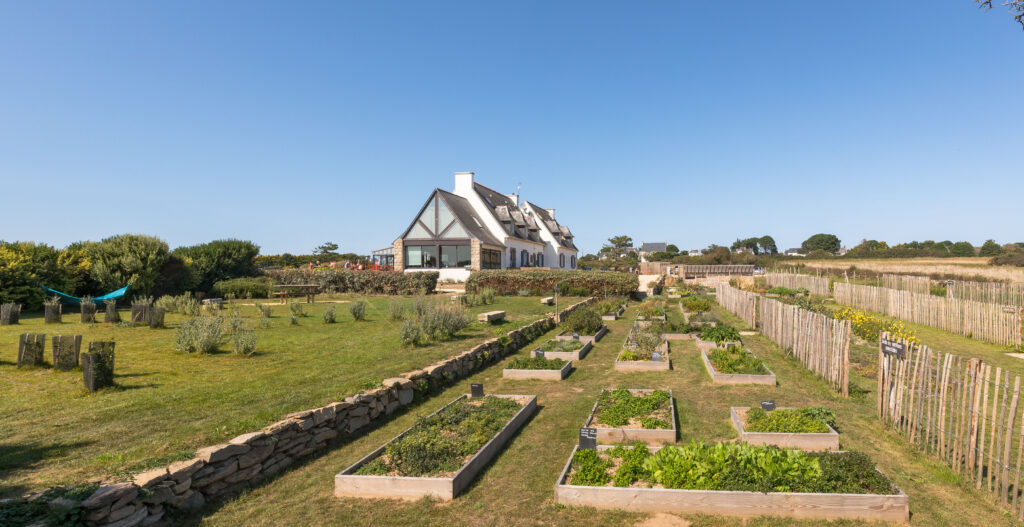
Arrive in Névez the day before so you can set off well-rested. The Raguenez peninsula is the ideal starting point: the GR34 passes right by the Ar Men Du hotel and restaurant, which overlooks Raguenez Island. You’ll enjoy a peaceful night’s sleep, dine on dishes made with local produce, and have just a few metres to walk in the morning before you set foot on the trail.
Day 1: from Raguenez to Concarneau, about 20 km
The stage begins on Tahiti beach with its turquoise waters, then heads towards Pointe de Trévignon, with its lagoons and small harbour. The route then alternates between dunes and unspoilt beaches all the way to Concarneau. At the end of the day, the walled town and its ramparts await you for a well-deserved stroll.
Day 2: from Concarneau to Bénodet, about 25 km
The longest stage of the week. The trail winds its way round the cove of Saint-Laurent, passes the Cabellou beaches and then reaches Beg-Meil and La Forêt Bay. In Bénodet, the ferry takes you across the Odet to Sainte-Marine, one of the most picturesque sections of the route. Check the ferry timetable, as it varies depending on the season.


Day 3: from Bénodet to Loctudy, approximately 18 km
A more pleasant day, between the Mousterlin marshes and the Pont-l’Abbé river. The Pays Bigouden begins here, with its oyster ports and low-roofed houses. The perfect stop to take a breather halfway through the journey.
Day 4: from Loctudy to Saint-Guénolé, approximately 22 km
The path passes through Le Guilvinec, France’s leading small-scale fishing port. Arrive around 4.30 pm to watch the boats return and take part in the fish auction. Further on, the Eckmühl lighthouse towers 60 metres above the Penmarc’h headland. The coastline becomes rockier and more rugged: the scenery changes.
Day 5: from Saint-Guénolé to Audierne, approximately 25 km
The wildest stretch. La Pointe de la Torche, a famous surfing spot and prehistoric site, marks the start of the long Bay of Audierne: kilometres of pebbles and dunes, without a single shop in sight. Make sure you pack a picnic and plenty of water. Reaching the port of Audierne, at the mouth of the Goyen, makes the effort well worth it.
Day 6: from Audierne to Pointe du Raz, approximately 16 km
The finale. The path climbs up the cliffs of Cap Sizun, passes Pointe de Lervily and then Baie des Trépassés, facing the island of Sein. Pointe du Raz, a ‘Grand Site de France’, marks the end of your week: the ocean stretching as far as the eye can see, the Vieille lighthouse amidst the Raz currents. A grand finale that does justice to all your efforts.
Day 7: Return journey and recovery
The BreizhGo bus, route 53, runs from Pointe du Raz to Quimper, where you can catch the train. If you’re still up for a bit more walking, a short loop around Plogoff gives you the chance to enjoy Cap Sizun one last time before heading back.
© The Outdoors / Tourisme Bretagne
Where can you stay along the GR34?
Southern Finistère offers a wide range of accommodation options: hotels, guesthouses, campsites and stopover gîtes. From June to September, book several weeks in advance, especially at weekends and on public holidays. Wild camping is permitted in certain coastal towns from sunset to sunrise, but is prohibited on the dunes and in protected areas: check with the town hall before pitching your tent.
Another option, ideal if you don’t want to carry your rucksack all week, is a hub-and-spoke hike. You stay in a single accommodation and set off each day to explore a different section of the trail.
From Ar Men Du in Névez, the most beautiful sections of the area can be explored as day trips: the Pointe de Trévignon, the Ria de l’Aven towards Pont-Aven, or the banks of the Belon and its oyster beds. You can travel light and return to your sea-facing room every evening.

What kit do you need for a week on the GR34?
There’s no need to kit yourself out as you would for high-altitude mountaineering, but a few essentials can make all the difference:
- well-worn walking boots, either low-cut or mid-cut
- a 35- to 40-litre rucksack if you’re carrying your own things
- a waterproof windbreaker: the Breton wind is your main enemy, even more so than the rain
- a water bottle of at least 1.5 litres; there are no water points on some stages
- A cap and sun cream – the glare off the water is striking, even on an overcast day
- the FFRandonnée guidebook for that section or the GPX track on your phone, along with a power bank
Logistics: transport, supplies and tides
Getting there: take the train to Quimper, then a BreizhGo coach or taxi to Névez. On the return journey, the number 53 bus runs from Pointe du Raz to Quimper in around 1 hour 30 minutes.
Tides: check the tide times every morning. Some sections can be crossed on foot at low tide, and the spectacle of the spring tides transforms certain beaches. The Bénodet ferry timetable also varies depending on the season.
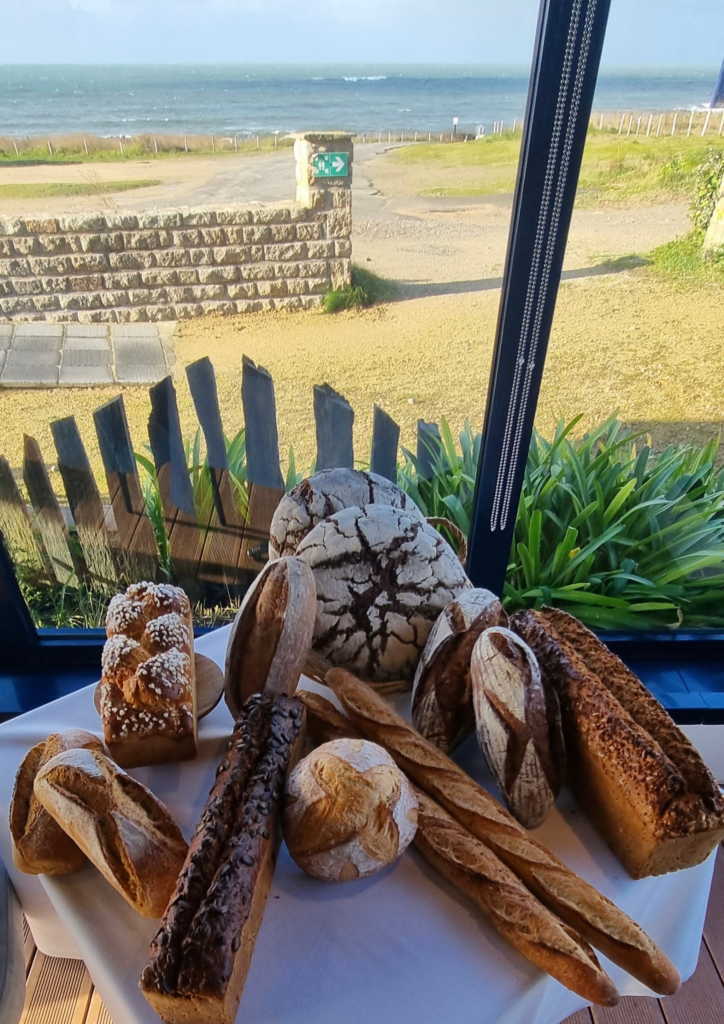
Provisions: bakeries and convenience shops are available in most of the villages along the route. Two exceptions to bear in mind: Audierne Bay on Day 5, where there are no shops for around 20 kilometres, and certain sections around Cap Sizun on Day 6.
When is the best time to go?
May, June, September and October offer the best balance: good light, quiet trails, open accommodation and ideal temperatures for walking. In summer, you can also go for a swim, though this comes at the cost of higher visitor numbers and the need to book in advance. Winter is still an option for seasoned walkers, with short days and changeable weather.
One thing holds true all year round in Brittany: you can experience all four seasons in a single day. Set off wrapped up warm – you’ll find you can shed layers as you go.
© Noemie LEFEVRE / Tourisme Bretagne
Places not to be missed along this stretch
- Raguenez Island and Tahiti Beach in Névez
- Trévignon Headland and its ponds
- the walled town of Concarneau
- the ferry crossing of the Odet between Bénodet and Sainte-Marine
- returning from a fishing trip to Guilvinec
- Eckmühl Lighthouse in Penmarc’h
- Pointe de la Torche and Audierne Bay
- Pointe du Raz and the Bay of the Dead
© Marius Brosset / Tourisme Bretagne