
Tucked away in southern Finistère, Trégunc combines charm and natural beauty. From its unspoilt beaches to its mysterious standing stones, the town offers a wealth of activities for those seeking an authentic experience. Whether it’s family outings, sporting activities or walks, there’s something for everyone. Find out how to make the most of this town.
Explore the beaches and the Trévignon headland
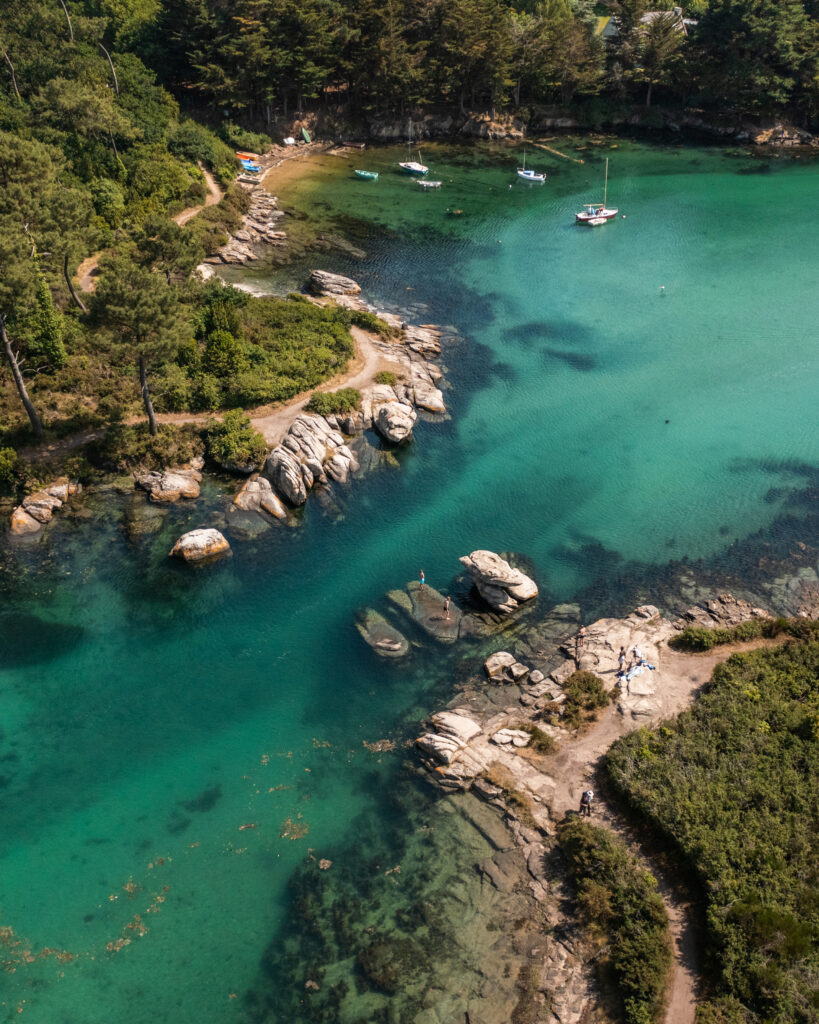
One of the first delights to savour in Trégunc is undoubtedly its spectacular coastline, lined with picture-postcard beaches. The Pointe de Trévignon stands out as a must-see spot with its turquoise waters and fine sand. It’s the perfect place to lay out your towel, go for a stroll or take photos of the stunning seaside panorama that unfolds before you.
Water sports also appeal to young and old alike: swimming, stand-up paddleboarding, windsurfing and kayaking.
Discover the variety of beaches
Trégunc boasts some 23 kilometres of coastline dotted with sheltered coves, small inlets and long sandy stretches. Among the favourite spots, Don Beach charms visitors with its peaceful atmosphere, whilst Kerdallé Beach is just a stone’s throw from the coastal footpaths. These spots are ideal for observing the local wildlife, particularly the many birds that make the most of the sandbanks at low tide.
A walk to the tip of Trévignon
A walk to the tip of Trévignon reveals stunning scenery, with a mix of rocks, beaches and flower-strewn moorland. The Trévignon lighthouse watches over this unique landscape. From this rocky outcrop, the view stretches out to the surrounding islets, which are often visited by migratory birds.
The walk also offers the chance to explore the harbour and its bustling atmosphere, punctuated by the comings and goings of fishing boats. From there, it’s easy to reach the dunes and ponds in the area, which are true havens for local biodiversity. It’s the perfect spot for an impromptu picnic or to watch the sunset.
© Thibault Poriel / Tourisme Bretagne

Hiking along the trails amongst menhirs and dolmens
You simply cannot visit Trégunc without exploring its many walking trails. Signposted routes wind their way along the GR34, the famous customs officers’ path. Everyone can choose a short loop or tackle a longer walk linking the village to neighbouring sites.
Each route takes in a variety of landscapes: dunes, cliffs, wooded countryside and heathland carpeted with heather, depending on the season.
A walk to discover the standing stones
Trégunc’s heritage is characterised by its legendary standing stones, silent witnesses to a history stretching back a thousand years. Menhirs and dolmens dot the countryside, often shrouded in mystery and local traditions. A stroll amongst these megalithic remains allows you to step back in time and immerse yourself in Breton culture.
A number of themed trails invite you to explore these stone giants, winding your way through country lanes and flower-filled hamlets. Discovering a menhir hidden behind a hedge or a dolmen as you round the bend of a copse makes the experience both fun and enriching.
© John Summerton / Tourisme Bretagne
Trails around chapels and small heritage sites
As you stroll along the paths through the village, you’ll come across several chapels and churches. These landmarks serve as a reminder of the importance of Trégunc’s religious heritage and create a peaceful atmosphere throughout the village.
Information boards are dotted around certain sites, enabling visitors to learn about the history of these buildings. As you walk along these paths, you’ll also come across old mills, wash houses and stone crosses – living reminders of rural life in days gone by.
Observing flora and fauna
Trégunc is notable for the diversity of its flora and fauna. These natural habitats are home to numerous birds, whose behaviour can easily be observed at different times of the year.
There are numerous nature trails leading into these nature reserves. With binoculars in hand, many visitors try their hand at identifying swans, coots, herons and colourful songbirds. All it takes is a little patience to catch sight of a swarm of dragonflies, spot a shy hare or watch butterflies flitting gracefully through the wildflower meadows.
- Exploring the dunes and endemic flora
- Birdwatching near the ponds
- Picking blackberries and wild berries, depending on the season
- Identifying aromatic plants typical of the Breton coast
The dunes, for their part, are home to flora adapted to sea spray, where everlasting flowers, marram grass and sea lilies thrive despite the salty wind. Amateur botanists appreciate the diversity of these unspoilt habitats, which can be explored on foot.
© Noémie Lefèvre / Tourisme Bretagne


