The Crozon Peninsula juts out into the Atlantic Ocean in the heart of Finistère, surrounded by the Iroise Sea to the west, Douarnenez Bay to the south and Brest Harbour to the north. This stunning area, part of the Armorique Regional Nature Park, boasts some of the best-preserved coastal landscapes in Cornouaille and Brittany, all within an area of 150 km². Dizzying cliffs, idyllic beaches, charming villages and Breton megaliths: these are the must-see places to visit during a stay in north-western Finistère.
The main headlands: stunning views of the Atlantic
Pen-Hir Headland
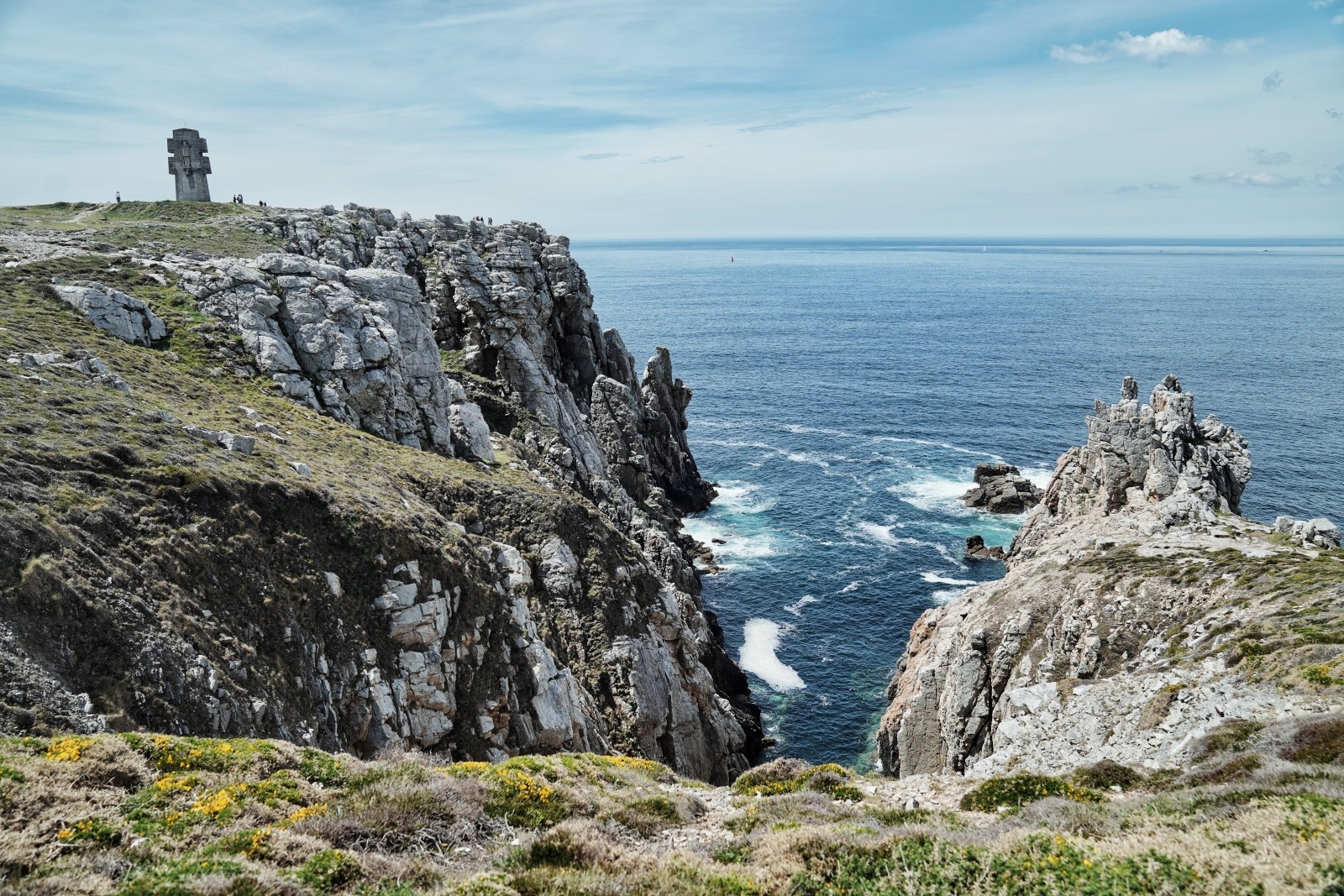
The Pointe de Pen-Hir, in the commune of Camaret-sur-Mer, rises to a height of 63 metres above the Iroise Sea. It offers the most iconic view of the Crozon Peninsula. From the cliff, the coastal view stretches as far as the Raz headland on one side and the Saint-Mathieu headland on the other, on a clear day. Below, the Tas de Pois – a line of rock formations rising from the Atlantic – are home to an exceptional variety of marine and birdlife. The GR34 coastal path runs along the edge of the cliff to the Monument aux Bretons, unveiled by General de Gaulle in tribute to the Breton soldiers who fell during the Second World War. It is one of the most photographed spots in Cornouaille.
Cap de la Chèvre
Cap de la Chèvre forms the southern tip of the peninsula and marks the boundary of the magnificent Bay of Douarnenez. It is one of the wildest and most stunning spots on the Breton coast: the cliffs drop sheer into the ocean, fringed by pine forests clinging to the rock face. The GR34 offers a 20-kilometre coastal loop starting from the cape. On a clear day, Cap Sizun and the Pointe du Raz are visible to the east, whilst to the west, the vast expanse of the Atlantic stretches to the horizon.
© Lea Guillotte / Tourisme Bretagne

The Dinan headland
Less crowded than Pen-Hir, the Pointe de Dinan holds one of the peninsula’s most beautiful surprises: a natural arch carved by the sea into a huge rock, known locally as the “Château de Dinan”. It can be reached via a coastal path from the hills above, or from Kerloc’h beach at low tide. From the headland, the view takes in Pen-Hir, the Pointe du Raz and the Pointe de Roscanvel all at once. An idyllic spot, still sheltered from the crowds.
Toulinguet Point
Located in Camaret-sur-Mer, the Pointe de Toulinguet is the part of the peninsula most exposed to Atlantic winds and tides. At spring tides, numerous sea caves are revealed at the foot of the cliffs. The site is home to a lighthouse and a semaphore station built in 1952, which is still in operation. The fortifications surrounding it open their doors to the public during Heritage Days. It can be reached from the superb Pen-Hat beach.
The Pointe des Espagnols
At the far north-western tip of the peninsula, in the commune of Roscanvel, the Pointe des Espagnols offers a magnificent view of Brest harbour and the winding northern coastline. Its name is a reminder of its history: a Spanish garrison built a fort there in the late 16th century, before Vauban constructed a defensive battery there a few decades later. The Vauban battery can still be seen today, bearing witness to the strategic importance of this Breton headland.
© Berthier Emmanuel / Tourisme Bretagne
The most beautiful beaches on the Crozon Peninsula
Which beach in Crozon is a real paradise?
Île Vierge beach, at the tip of Saint-Hernot, is considered one of the most idyllic beaches in Europe. This stunning cove of white pebbles is flanked by high rocky cliffs and surrounded by an intensely blue sea. Since March 2020, direct access to the beach has been prohibited due to the danger posed by the access path. The coastal paths higher up offer the chance to admire the site with magnificent views of the bay.
Morgat Beach
Morgat is the peninsula’s large beach of fine sand, sheltered by the bay of the same name. It is the ideal spot for families, with lifeguards on duty during the season. Just nearby, the superb sea caves of Morgat can be explored by kayak or boat: some are as deep as 80 metres and feature spectacular ochre and red hues, characteristic of Armorican sandstone.
© Phil Bucher / Tourisme Bretagne


La Palue Beach
La Palue beach is the premier surfing spot on the peninsula. Facing directly out onto the Atlantic, it is hit by a steady, powerful swell. Swimming here is dangerous due to the rip currents, but the natural coastal setting, with its dunes and unobstructed view of the island of Sein, makes it a superb place for a walk.
Pen-Hat Beach
Pen-Hat is one of the most exposed beaches on the peninsula, facing the Iroise Sea. Swimming is not permitted here, but it is the starting point for the footpath leading to Pointe de Toulinguet. It is also a popular spot with photographers for its magnificent sunsets over the Atlantic.
© Out Studio / Tourisme Bretagne
What is a typical village on the Crozon Peninsula
Camaret-sur-Mer is the most iconic village on the Breton peninsula. Its colourful harbour, its graveyard of fishing boats beached on the shore, and its Vauban Tower – a UNESCO World Heritage Site – make it an unmissable stop for any visitor to Cornouaille. The Notre-Dame-de-Rocamadour chapel, at the entrance to the harbour, is a living testament to the local seafaring tradition. On the very outskirts of the village lie the Lagatjar alignments: 143 Breton menhirs standing on a moor, one of the best-preserved megalithic sites in Finistère.
An hour’s drive south, Locronan is the perfect way to round off your stay: listed as one of the most beautiful villages in France, this charming medieval Breton village is often known as the ‘artists’ village’ because of its well-preserved granite-paved streets. Together with the Crozon Peninsula, it forms an unmissable itinerary in Cornouaille.
Morgat, a seaside resort within the municipality of Crozon, has a more laid-back feel, with its seafront, Belle Époque villas and marina.
© Brock et Betty / Tourisme Bretagne


Brittany’s megalithic heritage
The Crozon Peninsula is one of the areas in Finistère with the highest concentration of megaliths. As well as the Lagatjar alignments in Camaret, there is the Rostudel dolmen, the Pen ar Run dolmen, the menhir known as ‘La Républicaine’ and the Lostmarc’h menhir. These unmissable sites can be visited on foot via the signposted coastal paths and are particularly well suited to family walks through the heart of prehistoric Brittany.
Aber Island
The Île de l’Aber is only accessible at low tide, on foot from the mainland. It is home to the ruins of a fort built in 1862 to protect Morgat Cove, as well as a former 19th-century lime kiln. Surrounded by the waters of Douarnenez Bay at high tide, the island offers a magnificent coastal view of the peninsula. It is essential to check the tide times before visiting.
© Lamoureux Alexandre / Tourisme Bretagne
Practical tips for visiting the Crozon Peninsula
The Crozon Peninsula is well worth a stay of at least three to five days to explore at a leisurely pace. A car is essential for travelling between the various coastal headlands, which are often several kilometres apart. May, June and September are the best times to visit: the must-see sites are accessible, the Breton light is superb and visitor numbers remain reasonable. Good walking shoes and windproof clothing are essential, even in the height of summer. The peninsula is designated a sensitive natural area: you should stick to the signposted paths to help preserve the dune ecosystems and Atlantic cliffs.
Stay in Brittany to explore the Crozon Peninsula
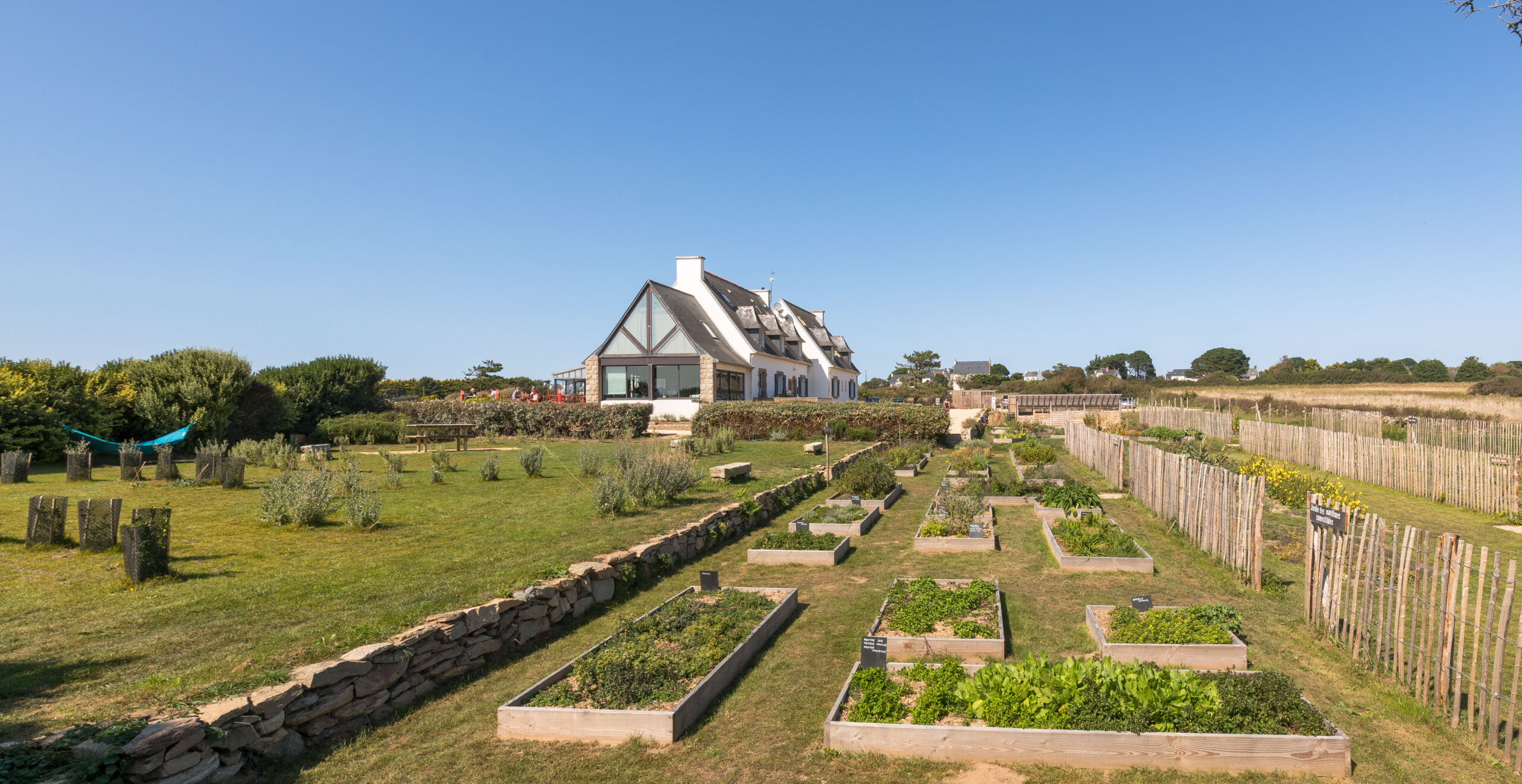
The Crozon Peninsula is situated about an hour’s drive from the southern coast of Finistère, right in the heart of Brittany’s Cornouaille region. The Ar Men Du hotel, located in Névez, is an ideal base from which to explore this wild and stunning stretch of the Atlantic coast of Brittany. Whether you’re spending a day on the magnificent cliffs of Pen-Hir, taking a coastal stroll in Camaret-sur-Mer or stopping off in Locronan, at the end of the day you can enjoy the tranquillity of a hotel overlooking the ocean, between Concarneau and Pont-Aven. Check our availability and tailor your stay in Brittany to suit your coastal exploration plans.