0298068422
 contact@men-du.com

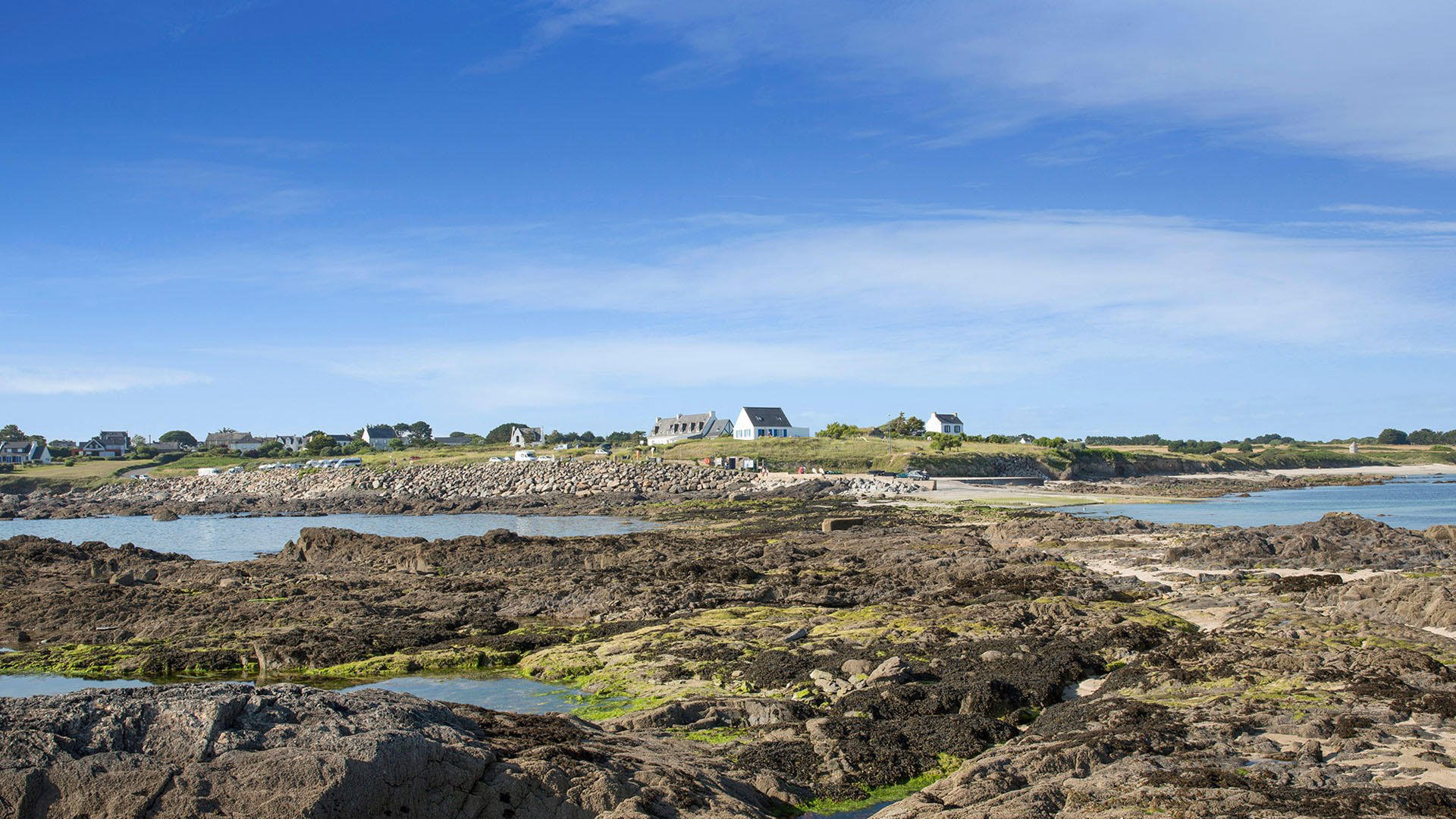
Southern Finistère is one of the most bountiful areas for shore fishing in Brittany. Every low tide brings its own discoveries: clams buried in the sand, crabs hiding under rocks, periwinkles clinging to seaweed, and razor clams to be unearthed at the tip of the claw. Whether you’re an experienced fisher or just curious and looking to try it out with the family, this corner of Brittany offers exceptional conditions for bringing home a well-stocked bucket.
The best spots around Névez and in southern Finistère
Riec-sur-Bélon, Questélan Beach, and Saint-Léger Cove
A few kilometers from Névez, between the Aven and the Bélon, Riec-sur-Bélon is the Breton capital of the flat oyster. Questélan Beach and Saint-Léger Cove are spots for seasoned fishermen: you’ll need to scrape, turn over rocks, and search the pockets of wet sand to bring back periwinkles, crabs, razor clams, and wild oysters. Remember to close up the areas you’ve searched by putting each rock back in its place—an essential step to preserve the resource. The landscape, carved by the meandering Bélon River, is among the most beautiful along the entire southern coast of Brittany.
Moëlan-sur-Mer, Trénez, Malachape, Kersecol, Merrien
The town of Moëlan, bordered by rias that cut deep into the land, offers several spots that are very popular with local fishermen. The beaches of Trénez and Malachape in Brigneau, the Kersecol headland, and Baz Couz in Merrien are a delight for young and old alike. The GR34 trail runs along these areas, allowing you to reach the shore fishing spots via magnificent coastal walks. It’s the perfect way to combine hiking and fishing, and return with a bucket full of clams and small shellfish.
L’Île-Tudy, the ultimate family-friendly destination
Île-Tudy, a peninsula in the Pays Bigouden, is almost entirely surrounded by fine sand, allowing you to walk all the way around it at low tide. The area is spacious, with no dangerous zones, and the catch is plentiful: cockles, clams, periwinkles, shrimp, and oysters can be gathered at a steady pace. It’s the perfect spot to introduce children and visiting campers to shore fishing, with the added bonus of remarkable sunsets over the Pont-l’Abbé River and the beaches of the Bigouden region.
Fouesnant, Pointe de Mousterlin, and Cap Coz
The area around Beg Meil and Pointe de Mousterlin features rocky flats that are largely exposed at low tide. Crabs, spider crabs, limpets, and periwinkles are abundant here. Cap Coz, on the La Forêt Bay side, is sandier and well-suited for families looking for cockles and razor clams. A short stroll along the coastal paths between the two points makes for a pleasant way to round out the outing.
Ris Beach in Douarnenez
Ris Beach is the ideal spot for beginners in the area. At low tide, the water recedes far out onto a wide, flat sandy beach, with no slippery rocks or treacherous currents. The conditions are perfect for beginners and family outings. You’ll mainly find cockles, periwinkles, and a few small Breton crabs well hidden under the tide lines.

Photo credit: Noémie Lefèvre
What You Can Gather in Southern Finistère
Southern Finistère is particularly rich in shellfish: clams, cockles, mussels, wild oysters, periwinkles, razor clams, and scallops. As for crustaceans, velvet crabs, green crabs, spider crabs, and brown shrimp are the most common catches. On the rocky shores, you’ll also find limpets and sea urchins, the latter subject to strict minimum size requirements. A good catch often turns into a Breton feast that very evening: clam galettes, crêpes topped with fresh shrimp, seafood platters… the flavors of Breizh begin on the foreshore.
What to Bring
No need for expensive gear: boots or old closed-toe shoes (wet rocks can be sharp), a bucket, a rake or small rake, a net, gloves, and a pocket knife are all you need. In the summer, bring a hat and sunscreen. In spring and fall, a windbreaker is essential against the Breton wind. Always bring your phone; the maritime emergency number is 196.
Fishing by the Book: What You Need to Know
Recreational shore fishing is permitted in Finistère, provided you comply with current regulations. Each species has a minimum catch size: free size charts are available at local tourist offices. Certain areas may be subject to temporary prefectural orders for health reasons. Always check for current restrictions before heading out, particularly on the Finistère Prefecture website or at the tourist office. Always put turned-over rocks back in their place: this simple gesture protects habitats and allows resources to replenish from one tide to the next.
Just a stone’s throw from all these attractions, the Ar Men Du hotel, with its Michelin-starred restaurant, located in Névez in Finistère, welcomes you to the heart of this exceptional region.