
There are places that naturally invite you to take a breather. Finistère is one of them. Here, the sea is everywhere, footpaths wind along the wild coastline, and the villages still live in tune with the tides. For those looking to travel differently – more slowly, more intensely – this corner of Brittany is the obvious choice.
What is “slow tourism”?
Slow tourism is the simple idea of taking your time. Rather than cramming in as many stops and visits as possible, you settle in one place, explore it on foot or by bike, eat local food and meet the locals. You come home with memories rather than a list of ticked boxes.
It doesn’t necessarily mean rustic comfort or a tight budget. It is a way of travelling that prioritises the quality of the experience over the number of kilometres covered, and which naturally minimises its impact on the environment: getting around on foot or by bike, taking the train rather than flying, choosing accommodation on a human scale – these are all actions that make slow tourism a more environmentally friendly way to travel.
© Grégory Mignard/ Tourisme Bretagne

Why is Finistère so well suited to this sort of holiday?
Within just a few kilometres, Finistère transitions from moorland to ria, from coastal woodland to white sandy beaches, and from fishing ports to market towns. This diversity within such a compact area makes it the ideal destination for a leisurely holiday: you don’t need to drive for two hours to experience a change of scenery.
Nature remains very much alive here. Nature reserves, estuaries and windswept headlands offer places to walk without encountering many people, especially in spring and autumn. Breton culture, meanwhile, is very much alive: markets, local festivals, and local producers who are easy to meet. Sharing a kouign-amann at a local bakery or buying dried seaweed from a market vendor – it’s these little moments that make the difference between an ordinary holiday and a trip you’ll remember.
© Noemie LEFEVRE / Tourisme Bretagne
A different way to get around: on foot along the GR34
The GR34, also known as the ‘customs officers’ path’, runs along the entire length of the Breton coastline for nearly 2,000 kilometres. In Finistère, it passes through some of the wildest landscapes on the French Atlantic coast.
From Névez, several sections can be explored in a day. Heading towards Pointe de Trévignon, the route runs alongside a protected nature reserve, home to terns and puffins. Heading towards Concarneau, the path follows a coastline indented with small coves where the seabed is exposed at low tide. The path is well signposted, the gradients are moderate, and you don’t need to be an experienced walker to enjoy it.
The advantage of the GR34 when taking a ‘slow’ approach is that you can tailor your outing to how you feel at the time: an hour, half a day or a full day, depending on your mood and the weather. The Ar Men Du hotel, situated in Névez just a stone’s throw from the trail, is an ideal base for organising these carefree walks: you set off in the morning and return whenever you like.
© Noemie LEFEVRE / Tourisme Bretagne


A different way to get around: cycling in Finistère
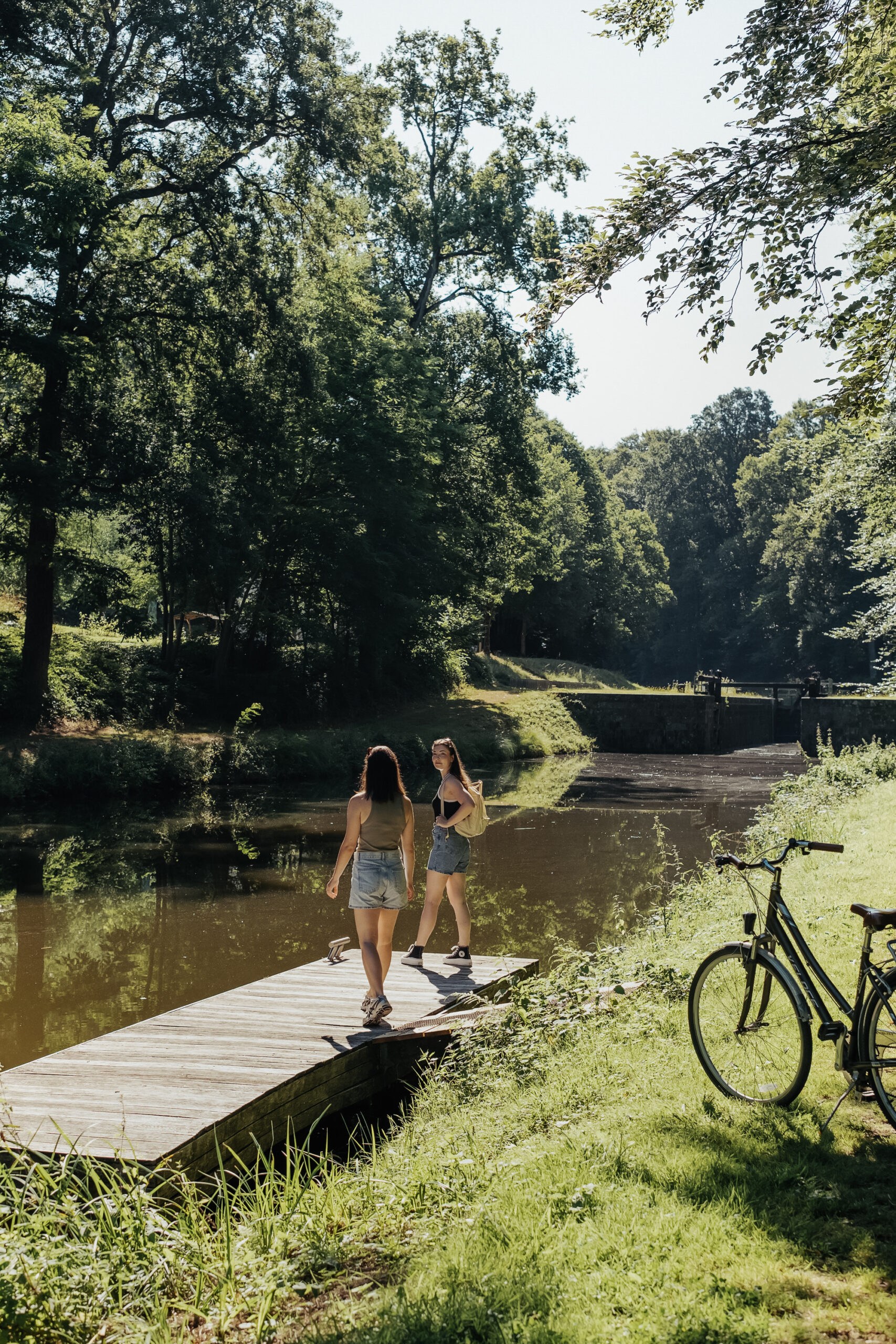
Cycling is another way to explore Finistère at your own pace. Greenways and cycle paths allow you to travel between towns without having to use main roads. From Névez, you can cycle to Concarneau or follow the ria towards Pont-Aven on routes suitable for families.
For those travelling by train, the Breton TER services allow bicycles on board free of charge outside peak hours. This means you can arrive in Quimper, stow your bike in the carriage and start cycling straight from the station. The distances in southern Finistère are very manageable, even for occasional cyclists.
© Grégory Mignard/ Tourisme Bretagne
Choosing the right season
Spring is probably the best time of year for a leisurely break in Finistère. The flowering gorse covers the moors in yellow, the footpaths are still quiet and there’s plenty of accommodation available. The temperatures are mild and the morning light on the coast is particularly beautiful.
Autumn has its own charms. The equinox tides are spectacular, the colours of the foliage change, and the villages take on a tranquillity not found in summer. It is also the ideal season to enjoy local cuisine, when seafood is at its very best.


Planning your trip without a car
Visiting Finistère without a car is perfectly possible and often more relaxing than you might think.
The TGV connects Paris to Quimper in under four hours. From Quimper, regular services run to the coastal towns, including Névez.
Once you’re there, walking and cycling are all you need to explore the area. Travelling light is key: a 35-litre rucksack, shoes suitable for the coastal path and a waterproof windbreaker will see you through most situations. The less you carry, the freer you are to stop wherever takes your fancy.
© 1 duvet pour 2/ Tourisme Bretagne
Frequently asked questions about slow tourism in Finistère:
Is slow tourism in Finistère suitable for families? Yes. The greenways are suitable for children’s bikes and bike trailers. The GR34 can be covered in short sections that are easily adaptable. Shore fishing and the beaches along the south coast offer children the chance to immerse themselves in nature without the need for any special equipment.
What is the difference between slow tourism and ecotourism? Ecotourism focuses on exploring and preserving natural environments. Slow tourism is broader in scope: it also encompasses local culture, gastronomy and modes of transport. The two approaches often overlap in Finistère.
Is Ar Men Du suitable for a ‘slow tourism’ break? The Ar Men Du hotel and restaurant is situated in Névez, a stone’s throw from the GR34 and the Trévignon Nature Reserve. Its cuisine is based on local produce and coastal fish. It is an ideal base for exploring southern Finistère on foot or by bike.
Finistère doesn’t need to be reinvented to embrace slow tourism. The sea, the footpaths and the locals have been doing the job for a long time. You just need to take the time to let them get on with it. For a first visit, Névez and the Ar Men Du hotel are a very good place to start.

