
Eco-responsible tourism is not limited to a single type of activity or a label on the door of an accommodation provider. It is a way of approaching a holiday as a whole: the activities you choose, the place you stay, what you eat and the way you behave in natural environments. In Brittany, this approach takes on a special significance. The region is home to exceptionally rich coastal, wetland and terrestrial ecosystems, supported by local organisations committed to their conservation. Travelling sustainably in Brittany means contributing, even in a small way, to ensuring these environments remain vibrant.
Natural environments that deserve our respect
Brittany owes its biodiversity to the diversity of its landscapes. The Atlantic coastline, with its cliffs, rias and archipelagos, is home to a remarkable array of marine wildlife: dolphins, grey seals, puffins and northern gannets frequent these waters, which are among the most productive in Europe. The wetlands of the Gulf of Morbihan and the bird sanctuaries of Finistère, such as Cap Sizun, welcome hundreds of thousands of migratory birds every year. Inland, the moors and peat bogs of the Monts d’Arrée, in the heart of the Armorique Regional Nature Park, form rare ecosystems that are directly linked to the quality of Brittany’s aquatic environment.
What makes these environments so valuable is also their fragility. Unregulated tourism is one of the main causes of damage to natural coastal areas: trampling of the dunes, disturbance of nesting wildlife, and pollution of the foreshore. Choosing eco-responsible tourism in Brittany means, above all, understanding what you have come to see and adapting your behaviour accordingly.
© Noemie LEFEVRE / Tourisme Bretagne

Eco-friendly activities in Brittany: what people actually do there
Watching marine wildlife
Sea trips are one of the most memorable experiences of an eco-friendly holiday in Brittany. From the ports of Finistère, boats accompanied by nature guides offer trips to see dolphins and seals in the Iroise Marine Nature Park. These trips are based on the principle of respectful observation, with distance guidelines designed to avoid disturbing the animals. The islands of Ouessant and Molène, accessible by ferry, offer the chance to observe grey seals from the shore, in their natural habitat.
Discover the foreshore and the rias
At low tide, the Breton foreshore reveals a world of its own: seaweed, shellfish, starfish and small fish inhabit these intertidal zones that are exposed by the sea twice a day. Local guides organise excursions to teach visitors how to interpret these environments without damaging them. In southern Finistère, the Aven and Belon rias offer a particularly rich setting, where oyster farms sit alongside a dense estuarine fauna. Some oyster farmers open their facilities to visitors, providing a practical illustration of the link between water quality and the life of their farm.
Hiking in protected natural areas
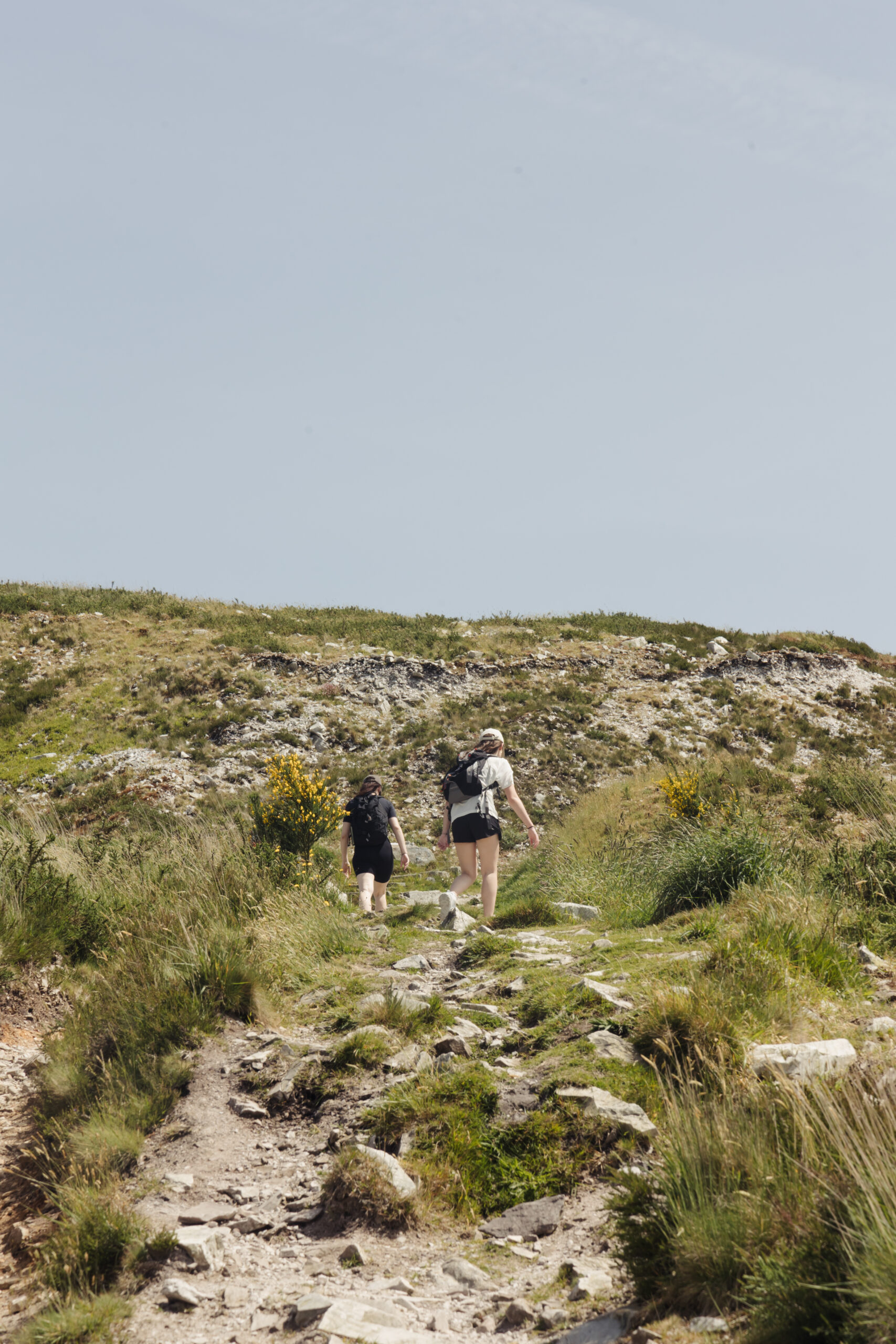
The GR34, which runs the entire length of the Breton coastline, is one of the most accessible hiking routes for eco-friendly tourism in Brittany. It passes through bird sanctuaries, moorland and cliff landscapes that have been spared from urban development. Some sections in Finistère pass through prime observation spots for seabirds and coastal mammals. Hiking along these signposted trails means discovering Brittany’s natural environments free from motorised traffic, at a pace that leaves you time to observe your surroundings.
© Noemie LEFEVRE / Tourisme Bretagne
Eco-friendly accommodation in Brittany: how to find your way around?
Choosing eco-friendly accommodation means choosing a venue with a practical approach to environmental issues: efficient use of water and energy, sourcing from local producers, and respect for the immediate environment. Existing labels (such as the Green Key and the European Ecolabel) provide guidance, but the accommodation’s geographical location and its ties to the local area are just as important as its certifications.
In Finistère, the Ar Men Du hotel and restaurant in Névez is a fine example of this. Situated overlooking the Atlantic, a stone’s throw from the Aven and Belon rias and the GR34 walking trails, it fits seamlessly into the landscape of southern Finistère. The cuisine showcases local fishermen and producers, demonstrating tangible support for an economy directly linked to the preservation of the marine environment. It is an ideal base from which to explore Finistère’s natural sites: Cap Sizun, the Crozon Peninsula and the Iroise Islands.


Best practices for eco-friendly tourism in Brittany
An eco-friendly holiday in Brittany is based on a few simple principles that apply throughout your trip.
On the coast: do not approach seals or nesting bird colonies; stay on the marked paths within nature reserves; do not take anything from the foreshore. In nature parks: keep dogs on a lead in sensitive areas; obey the regulatory signs.
When it comes to food: choose local producers, markets and restaurants that source their produce from Breton fish auctions and market gardeners. Eating locally in Brittany means supporting an economy that depends directly on the quality of the marine and agricultural environment.
For activity providers: give preference to local operators accredited by regional nature parks or affiliated with nature conservation organisations. They are the ones who ensure that the experience is environmentally responsible and who contribute directly to the conservation of these environments.
© Noemie LEFEVRE / Tourisme Bretagne
A stay in southern Finistère: the Ar Men Du hotel as a base
For an eco-friendly stay in Finistère, the Ar Men Du hotel and restaurant in Névez is the ideal base. Overlooking the Atlantic, a stone’s throw from the Aven and Belon rias, the GR34 walking route and the natural sites of southern Finistère, the establishment embodies the local roots that eco-friendly tourism seeks to promote: cuisine featuring seafood and local Breton produce, a preserved environment, and direct access to the natural areas that make this corner of Finistère so special.
Book your stay on the Ar Men Du website and set off to explore the wild and unspoilt Finistère.


